
Not so hot
Beverly might have the hottest zip code in the country. But a new designation by the state shows there are plenty of people in need.

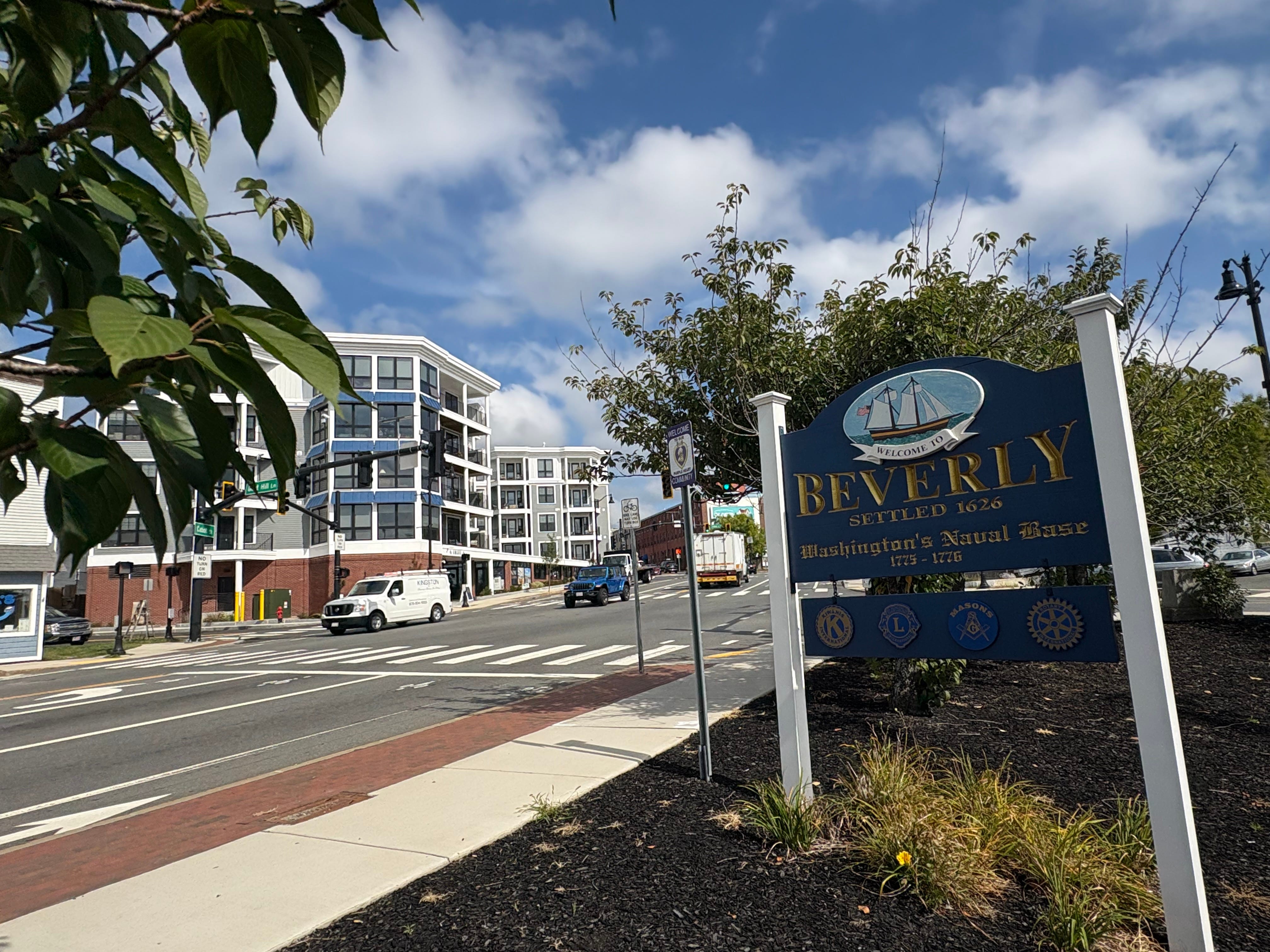
Last month Beverly was named the hottest zip code in the country by realtor.com. The state of Massachusetts is about to bestow a different label on the city, one that may surprise you.
Beverly has been notified that it now qualifies as a “mini-entitlement” community under the Community Development Block Grant Program. It means that the city will be eligible for a significant amount of federal grant money over the next several years to help residents with low and moderate incomes.
Cities or towns are selected to be mini-entitlement communities if they meet three criteria — a percentage of low- and moderate-income residents of 40% or higher; a poverty rate higher than the state average; and a population over 12,000.
Beverly meets all three. The city’s poverty rate — the percentage of people living below the poverty line — is 9.9%, according to the 2023 American Community Survey. The state average is 9.7%.
Beverly was a mini-entitlement community for maybe a dozen years up until the early 2000s, when the criteria or the city’s demographics, or both, changed. Now we’re back in that category.
Right now the state has 10 mini-entitlement communities — Amherst, Chelsea, Everett, Gardner, Greenfield, North Adams, Southbridge, Wareham, Webster and West Springfield, according to the Executive Office of Housing and Livable Communities, the state agency that administers the Community Development Block Grant Program. A revised list will come out for the federal fiscal year 2026, and Beverly has been notified that they will be on it.
That means that instead of having to compete with other communities for community development block grants like it does now, Beverly will be eligible for a minimum of $850,000 from a pool of money set aside for mini-entitlement communities. The most common activities funded by the program, according to the state, including housing rehabilitation, infrastructure, business assistance, public social services, and downtown revitalization. The programs must benefit low- and moderate-income people.
Beverly will remain a mini-entitlement community for at least three years. After that the state recalculates again to see who remains eligible.
Not to make it too confusing, but there are also 37 entitlement communities — without the ‘mini’ — which are mostly cities with populations over 50,000. They receive block grants directly from the federal government. Salem, Peabody, Gloucester and Lynn are entitlement communities, according to this list on the EOHLC website.
So it looks like Beverly is one of only 50 or so municipalities in Massachusetts that qualify as an entitlement or mini-entitlement community. And the only one with the hottest zip code.
I have to admit I was surprised that Beverly qualifies as an entitlement community, even the ‘mini’ type. I asked Mayor Mike Cahill if he was surprised and he said, “We’ve got plenty of people who have needs economically, and we’ve known that about our community for a long time.”
“This is an acknowledgement that there is a need in Beverly,” he said.
What does it say that a city can have the hottest zip code in the country and be a mini-entitlement community at the same time? Darlene Wynne, Beverly’s director of planning and community development, said it reflects the “wealth gap,” meaning there are people out there with enough money to fuel a hot real estate market, but also people who need help meeting basic needs.
Wynne called the mini-entitlement distinction a “double-edged sword.” “We want to be able to help the community,” she said. “But we don’t want to qualify in that it means our community is struggling.”
Beverly had already applied for an $850,000 housing rehab Community Development Block Grant in April under the competitive process, before it was deemed a mini-entitlement community. It has yet to hear back on that application.
Cahill said Beverly sometimes has trouble qualifying for certain grants because state and federal programs generally put more weight on the total property value of a community when determining its eligibility. The fact that Beverly is a coastal community with expensive waterfront properties drives the city’s total property value higher, making it ineligible for certain programs.
“That sometimes obscures the fact that we have a lot of needs in the community,” Cahill said. “We find ourselves being kind of left aside by a lot of state and federal grant money. That was the main reason I created the grant position (the director of grants) when I first got elected. We have to work really hard for grant money.”
Cahill said the type of community development block grants the city received in the ‘80s and ‘90s “really makes a difference in the community.”
The new mini-entitlement status, surprising or not, could open the door for more.
Thank you for reading The Beverly Beat. My goal is to provide the kind of information about Beverly that you will find nowhere else. I grew up here and have covered the city for more than 40 years. I hope you will agree that my stories have the depth and nuance and personal touch that only someone with that kind of experience can report and write. The Beverly Beat now has nearly 2,000 subscribers and I am grateful for all of you. The vast majority of my stories are free, not behind a paywall, so I ask readers to voluntarily become paid subscribers in order to support my work if you can. Thank you.
And thanks to paid subscriber Ron Janard for this comment:
Thank you for explaining the grants and their different types in a clear and concise manner. Just one of the many reasons why I love the Beverly Beat!